A heavy, cloth-bound history manuscript lying open on a dark walnut desk, its cream-colored pages filled with dense, handwritten notes and faint pencil diagrams of WWII battlefronts. Around it sit neatly stacked archival folders, a worn leather briefcase, and a vintage steel desk lamp. The lamp casts a focused cone of warm light, leaving the rest of the study in soft shadow, with a blurred skyline of Warsaw and Berlin suggested through a rain-speckled window. Photographic realism at eye-level, with shallow depth of field highlighting the texture of paper and leather, creating an atmosphere of intellectual intensity and quiet, sophisticated contemplation.

Historia, wywiady i geopolityka oczami Theo Kantza

Autor

Strona prezentuje twórczość i badania Theo Kantza — byłego naukowca i przedsiębiorcy, który łączy rygor metodologiczny z doświadczeniem biznesowym, analizując II wojnę światową, porządek po 1945 roku oraz wojny wywiadów.
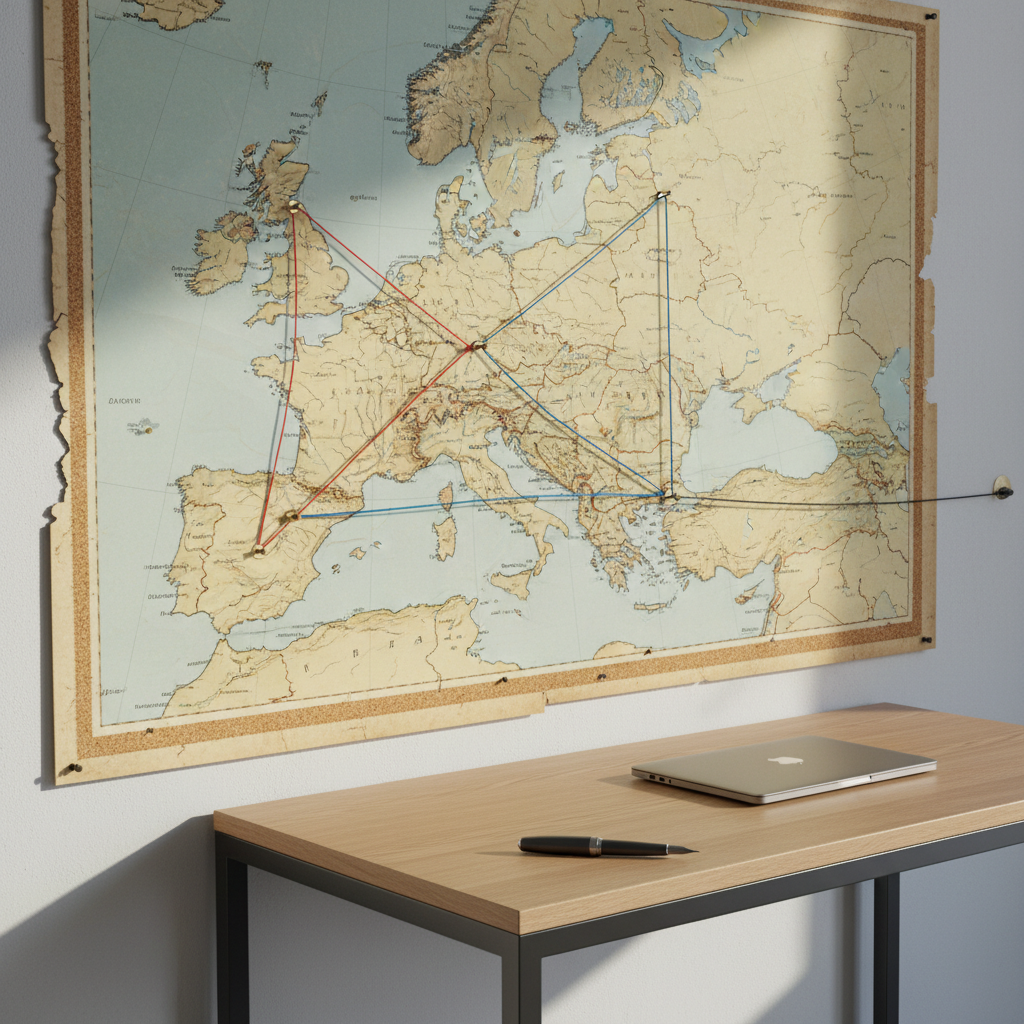
A large wall map of Europe in 1945, printed on slightly yellowed paper with frayed edges, pinned to a corkboard above a minimalist metal-and-oak writing table. Colored string traces secret routes between Warsaw, Berlin, London, and New York, anchored by small, unmarked metal pins. A sleek fountain pen rests beside a closed laptop, bridging past and present. Cool, diffused light from an unseen window creates soft reflections on the map’s surface and gentle shadows on the table. Photographic realism, shot from a three-quarter angle, with balanced composition that feels analytical, sophisticated, and steeped in post-war geopolitical intrigue.
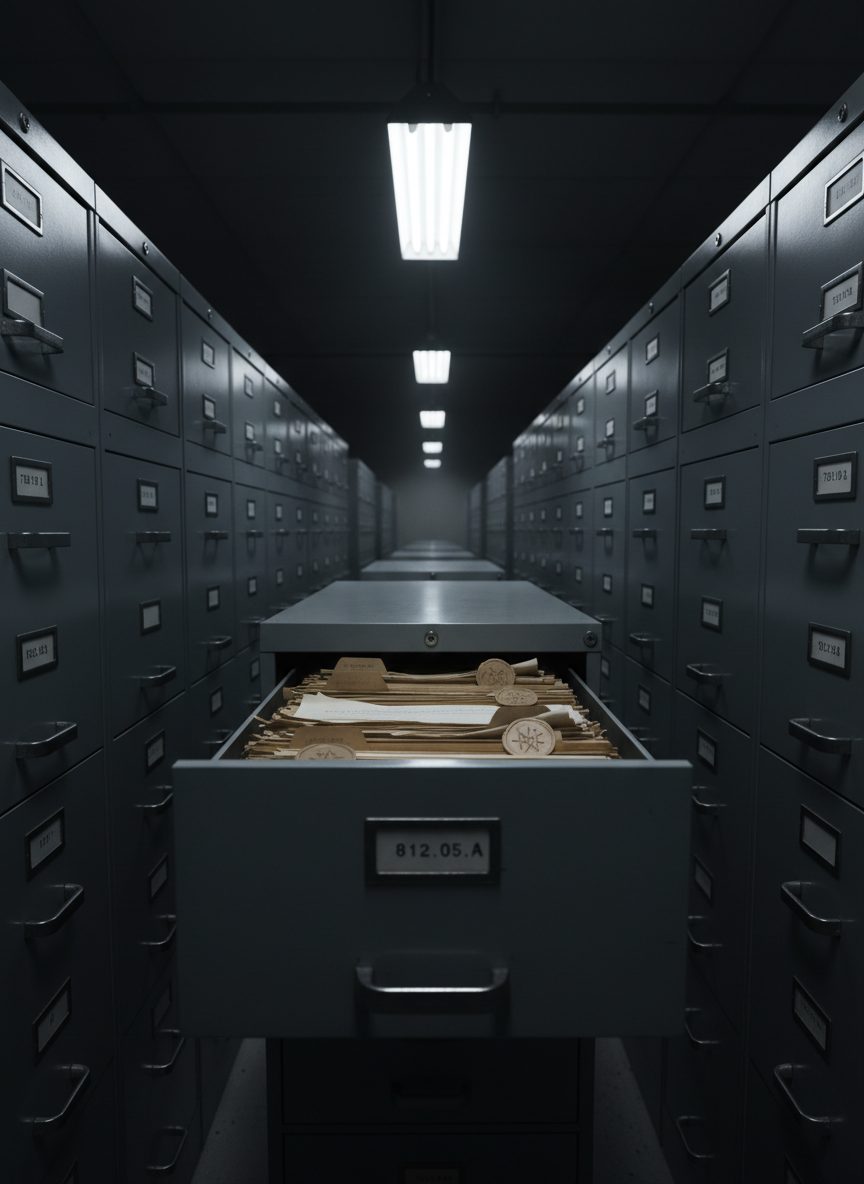
A dimly lit archival room with rows of steel filing cabinets stretching into the background, each drawer labeled with discreet numeric codes instead of names. In the foreground, an open drawer reveals meticulously organized WWII intelligence files, their paper slightly warped with age, sealed by neutral wax stamps. A single overhead fluorescent light casts stark, linear highlights along the metal surfaces, creating a high-contrast interplay of light and shadow. Photographic realism with a centered, eye-level composition and deep focus, evoking an atmosphere of secrecy, methodical analysis, and the hidden architectures behind international spy networks.
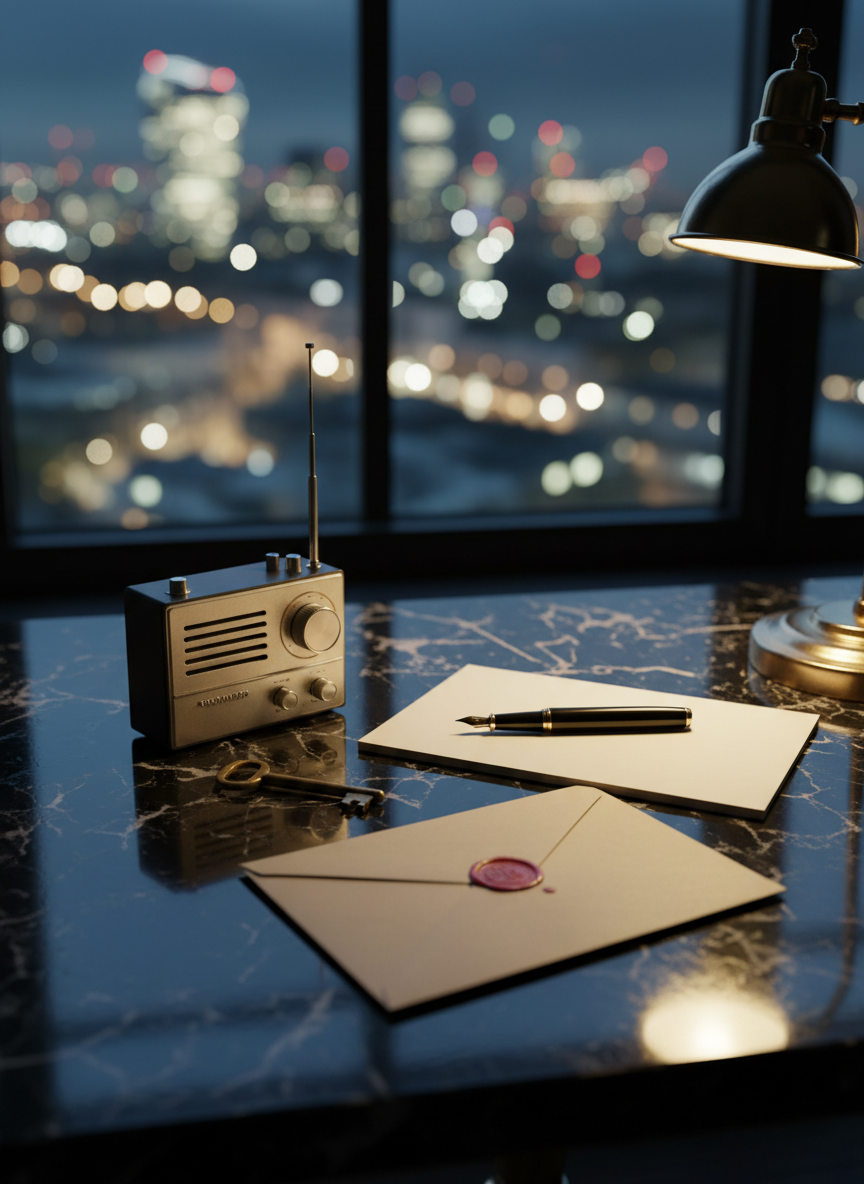
A polished black marble tabletop holding a carefully arranged still life of intelligence-era artifacts: a compact shortwave radio receiver, a plain metal key, a blank notepad, and a nondescript, unbranded envelope sealed shut. Reflections ripple subtly across the marble surface. Behind, a large window reveals a softly blurred night view of modern London’s skyline, its lights forming bokeh orbs. Cool moonlight mingles with a single warm desk lamp, creating a cinematic, noir-like contrast. Photographic realism from a low, close-up angle, emphasizing textures of metal, paper, and stone, evoking a mood of sophisticated suspense and timeless espionage narratives.
A modern, minimalist writing nook set against a tall bookshelf filled with uniform, spine-unlabeled volumes in muted grays and deep blues, suggesting classified histories. On the sleek oak desk rests a closed, dark linen notebook embossed only with subtle initials “T.K.” and a pair of simple reading glasses. A large window to the side frames a distant, hazy skyline blending elements of Warsaw and New York. Soft afternoon light spills in, casting long, gentle shadows and a calm, reflective glow. Photographic realism from a slightly elevated perspective, with balanced composition that conveys a sophisticated, contemplative atmosphere for an author of complex WWII and post-1945 narratives.

Newsletter

Otrzymuj analizy Theo Kantza prosto na swoją skrzynkę.

Visit us

Warszawa, Berlin, Londyn, Nowy Jork

Godzina

Poniedziałek–piątek 9:00–17:00

Telefon

(123) 456-7890